Fluid restriction dehydrated your child without addressing the brain's failure to wake. Midnight waking exhausted two people without training the sleeping mind. Market herbs promised results the bladder cannot deliver without the brain. The bedwetting alarm triggered after the accident rather than before it. Every strategy addressed the bladder. None addressed the brain-bladder connection that was never properly formed. You just chose the method that builds that connection: structured daily practice that teaches the sleeping brain to receive the bladder's signal. The brain learns. The bed stays dry. The child asks about the next sleepover.
21 days. The connection builds. The sheets stay dry. Your child's childhood returns fully to them.
🌙 "My child is not lazy. My child is not being difficult. The brain simply never learned to wake when the bladder signals during deep sleep. Mama Chidinma's method teaches it. The brain-bladder connection training builds the neural pathway that resolves this. The bladder capacity exercises strengthen the holding ability that supports dry nights. The evening protocol supports the body's natural rhythm. In 21 days, the brain learns. The sheets stay dry. My child asks about the next sleepover."
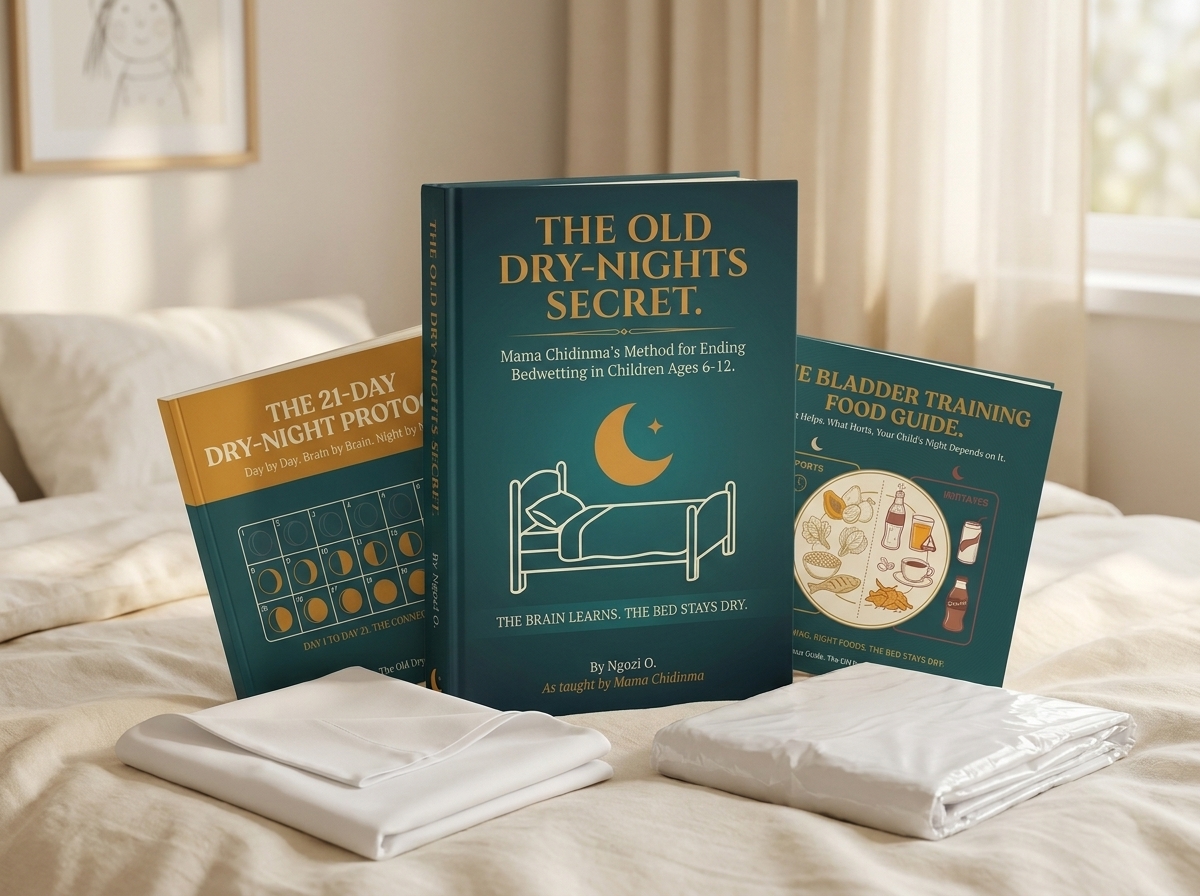
Your Complete Method Is Ready
Click the button below to download the full method and both bonus guides instantly.
Download Your Guides Now🌙 Here's What You Got
Mama Chidinma's complete 3-part method: brain-bladder connection training (daily exercises that build the neural pathway between bladder fullness and sleep arousal), bladder capacity builder (progressive daytime exercises that extend holding capacity), and evening support protocol (timing and routine adjustments that support dry nights without fluid restriction). Day-by-day for 21 days. Works for ages 6-12
A day-by-day calendar for the full 21-day method. Each day specifies the brain-bladder training exercise, the bladder capacity exercise, and the evening protocol steps. Colour-coded by week. Progress tracking column. Designed so the child can mark their own progress. Print it and put it on the bedroom wall
Specific foods and drinks that increase bladder irritability in children. The correct fluid timing schedule that supports capacity training without restricting water. Common Nigerian foods and drinks assessed individually. The evening fluid routine that works with the body's rhythm
Your First 48 Hours
Download Everything Now
Tap the button above. Save all 3 files. You and your child will reference the main method and the 21-Day Protocol daily.
Read the Bladder Training Food Guide Tonight (Bonus #2)
Start here before anything else. Open Bonus #2 and check what your child consumed today against the irritants list. Carbonated drinks, high-caffeine beverages (some popular Nigerian malt drinks contain caffeine), and high-citrus juices can increase bladder irritability and worsen nocturnal frequency. Identifying and removing these from your child's daily routine tonight can begin reducing episodes within the first week — before the brain-bladder training has had time to build. This is the fastest single change you can make.
Read the Main Method in Full
Read the full method before beginning Day 1. Understanding why each component works — why daytime bladder exercises affect night-time control, why the brain-bladder connection forms through repetition, why the evening protocol supports arousal without restricting fluids — will keep you consistent when Day 6 arrives and the sheets are still wet. The method works below the surface before it shows above it.
Print the 21-Day Protocol and Involve Your Child
Print the 21-Day Dry-Night Protocol from Bonus #1. Put it on the bedroom wall. Crucially: show your child the chart and explain that they will mark each day themselves. The child's ownership of the process is a documented factor in compliance and motivation. A child who is doing the method WITH you responds differently from a child having something done TO them. Frame it as a training programme, not a treatment. "We are training your brain to wake up when it's time."
Begin Day 1 Tomorrow Morning
Start the daytime bladder capacity exercises tomorrow (full instructions on Page 9 of the main method). These take 10-15 minutes and are done during the day, not at night. Begin the brain-bladder connection training at the time specified (Page 12). Implement the evening protocol from Page 16 tomorrow evening. The full method begins simultaneously — not one part at a time.
Prepare for Days 1-7: The Invisible Phase
The sheets will likely still be wet in Week 1. This is expected and does not mean the method is failing. The brain-bladder neural pathway takes 7-10 days to begin producing visible changes, according to the established understanding of how behavioural bladder training works. The first visible sign is not a dry morning — it is your child waking during the night. Just waking. Even if they don't make it to the toilet in time. Waking means the brain is beginning to receive the signal. Track waking in the progress column, not just dry mornings.
🌙 What to Expect Over 21 Days
⚡ Do This Right Now
Open the Bladder Training Food Guide (Bonus #2) and go to "The 3 Fastest Changes."
These are 3 adjustments that can begin reducing bedwetting frequency within the first week — before the brain-bladder training has built its full effect. The first is the most important: check whether your child drinks carbonated drinks or highly caffeinated beverages regularly. Caffeine is a known diuretic (it increases urine production) and bladder irritant. Some popular Nigerian malt drinks and soft drinks that children consume daily contain caffeine. Removing these from your child's routine tonight — not restricting water, just replacing bladder irritants with plain water — can produce a measurable reduction in nighttime bladder filling within days.
"The problem is not the bladder. The problem is the brain-bladder connection. Train the connection and the bedwetting resolves. Your child is not lazy. The brain simply never learned to wake up."
🌙 14-Day Unconditional Guarantee
If you are not satisfied for any reason within 14 days, full refund. No questions asked. You keep both guides regardless.
Need Help?
Questions about the brain-bladder training technique, the bladder exercises, the evening protocol, or anything at all? Parent to parent. We understand the morning.